Southeast Asia faces a pivotal energy crossroads as it prepares its 2025 Nationally Determined Contribution climate action plans. Despite heavy reliance on coal and natural gas, the region’s abundant solar and wind resources offer a path to a cleaner future. Accelerating renewable energy deployment requires stronger policies, regional cooperation through the ASEAN Power Grid and innovative finance models. Leaders’ decisions will shape whether the region will achieve its renewable energy goals.
As Southeast
Asian countries undertake their 2025 Nationally Determined Contribution climate
action plans, the region stands at a pivotal moment. The question is whether
ASEAN leaders will seize this opportunity to accelerate renewable energy
deployment or whether they will reinforce their reliance on fossil fuels.
The global
energy landscape is experiencing a seismic shift. Since 2021, electricity
generation from coal and gas has remained stagnant, while solar power
generation has grown significantly, signalling a decisive move towards clean
electricity as ageing fossil fuel plants phase out. At the heart of this
transformation is China’s manufacturing dominance in solar panels, wind
turbines, electric vehicles and batteries, positioning the nation as a central
force in the global green energy supply chain.
But Southeast
Asia has relied heavily on fossil fuels to power its development. Only 15.6 per
cent of ASEAN’s total primary energy supply was renewable energy in 2022. For a
more balanced perspective, it is worth noting that in ASEAN, the cost of
electricity from hydro, solar and geothermal is becoming cheaper than bioenergy
and coal, reflecting a growing momentum in the power sector. In the region,
solar power capacity increased from 11 gigawatts in 2019 to 26 gigawatts in
2023. But coal remained dominant in the region’s energy mix, accounting for
30.5 per cent and natural gas — often cited as a ‘transition’ fuel —
contributed 19.7 per cent.
Despite early
calls for a phase-down, baseline scenario projections forecast that coal and
natural gas will remain substantial components of ASEAN’s energy mix up until
2050 — though the region can expect advancements in renewable energy
technologies, declining costs and growing renewable energy investments.
Southeast Asia
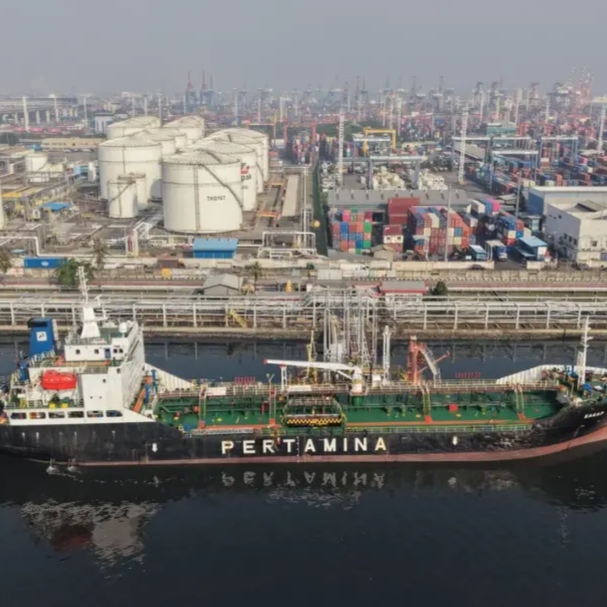
is emerging as a significant exporter of liquefied natural gas and coal. By
2023, natural gas and coal exports exceeded the region’s imports, with export
values reaching 29 million tonnes of natural gas equivalent and 146 million
tonnes of coal equivalent, respectively. The region ranks among the top global
liquefied natural gas exporters, shipping to China, Japan and South Korea.
But while ASEAN
is projected to become a net importer of natural gas by 2027, coal exports are
anticipated to continue until at least 2050, though their balance will likely
decline.
ASEAN
governments are caught between safeguarding the revenues they raise from coal
and gas exports — and preparing for when those markets dry up or become costly
imports — and reaching for a cleaner, more secure future.
Yet the human
and environmental costs of continued fossil fuel reliance grow harder to
ignore. Cities like Jakarta and Bangkok wake up under haze while farmers in the
Mekong Delta watch fisheries collapse as river ecosystems experience both
drought and flood. Without targeted and systematic decarbonisation efforts,
climate events are expected to increase in frequency and severity.
But change is
not easy. For fossil fuel companies and lenders to the fossil fuel industry,
retiring those assets early would require them to forego cash flows.
Renewable
energy investment in ASEAN is influenced by factors including costs,
environmental awareness, social norms, energy consumption habits and the
attribution of responsibility for environmental outcomes.
Yet, there is
reason for cautious optimism. Sun and wind resources are abundant in Southeast
Asia and solar panel and wind turbine costs continue to fall. Ambitious targets
already exist — ASEAN aims to lift renewable capacity to 35 per cent in
installed power capacity by 2025, a goal that would require a 15 per cent jump
from the region’s post-Paris baseline. If ASEAN governments hold firm on
policies like competitive auctions, feed-in tariffs and streamlined permitting,
they could unleash a wave of investment in renewables.
On the finance
side, new partnerships are taking shape. Blended finance models — mixing
concessional loans from development banks with private capital — can lower
risks for early renewable projects. Indonesia and Vietnam are adopting Just
Energy Transition Partnership financing packages despite the United States’
withdrawal from these agreements leading to a reduction in funding. With
well-structured deals, coal sector workers can access retraining programs and
social support, while stranded asset funds buy out plants and channel resources
into green industries.
But a truly
regional approach could be most potent. ASEAN leaders must increase the share
of green energy in the ASEAN Power Grid initiative. By harmonising regulations
and sharing research and development on battery storage between member states’
business sectors, ASEAN countries can smooth variable output and cut costs for
everyone. Joint procurement of panels, turbines and pumped hydro could deliver
bulk discounts — just as the European Union does in various sectors. Operationalising
Article 6 of the Paris Agreement by establishing a regional carbon market
mechanism would enable member states to mobilise climate finance.
As countries
sharpen their climate pledges in the run-up to COP30 in Belem, they should
enshrine precise coal phase-out dates, stop developing new coal power plants
and establish firm renewable energy ratio targets. Stronger Nationally
Determined Contributions would not only signal global ambition but unlock new
pools of multilateral funding and spur domestic reforms that would boost
investor confidence.
Southeast Asian
leaders’ decisions will determine whether the region can break free from the
chains of fossil fuel dependency and join the global renewable energy movement
to achieve the ASEAN 2045 Vision.
***
Irvan Tengku
Harja is Research Lead and Program Manager for Just Energy Transition and
Climate Action at The Habibie Center, Jakarta.
This article
was published on eastasiaforum.org on 09 August 2025
https://doi.org/10.59425/eabc.1754776800