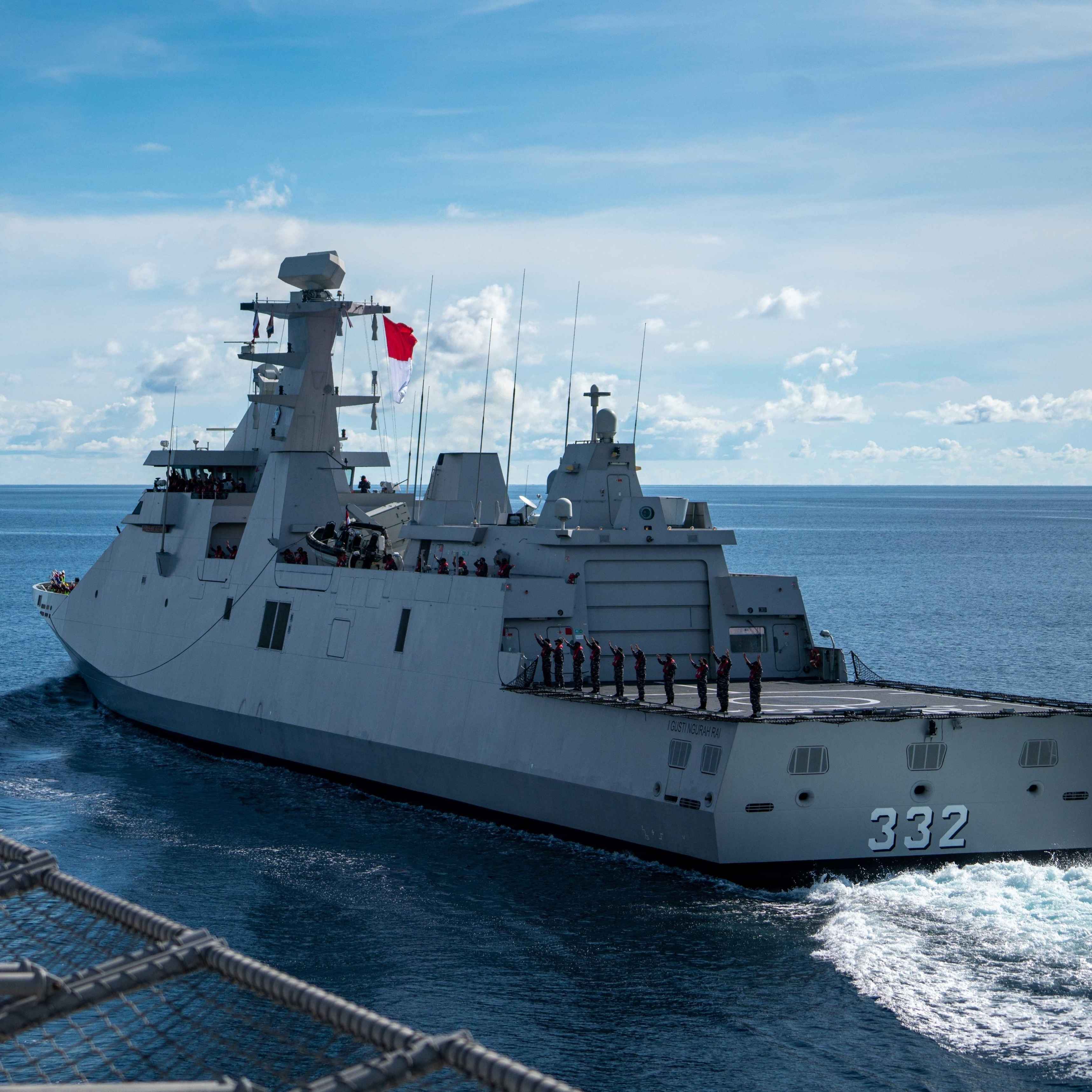
The Badr pact with Turkey, Qatar and Pakistan offers Indonesia defence equipment and capital, but tangled regional geopolitics pose a test
Indonesia could gain
critical defence technology, investment and export opportunities through a new
multi-nation defence pact with Turkey, Qatar and Pakistan, but analysts warn
its success hinges on turning high-level ambition into concrete projects.
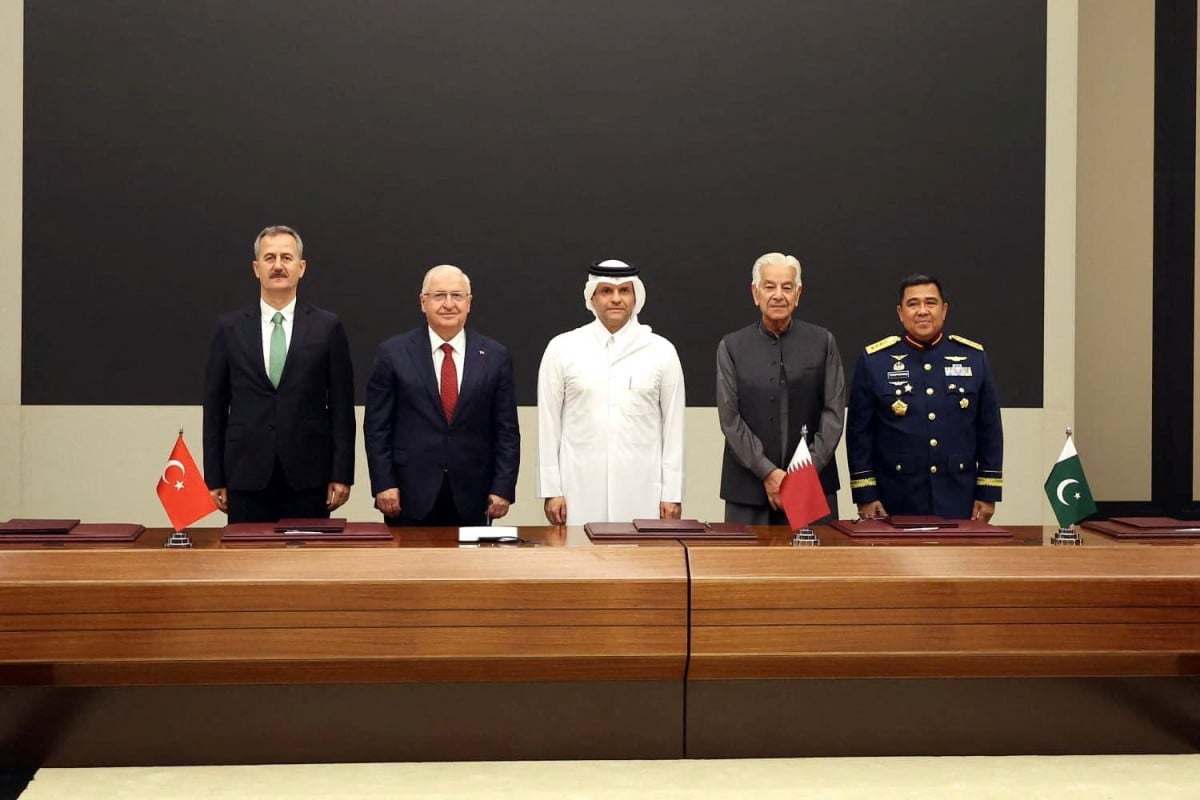
The four Muslim-majority
nations signed the Badr Memorandum of Understanding in Doha on Wednesday. The
agreement outlines a framework for defence “cooperation and integration” across
joint research and development, training exchanges and industrial capability
building.
“We believe that the Badr
MOU will contribute to transforming the complementary capabilities of Qatar,
Pakistan, Indonesia and Turkey into concrete projects,” Haluk Gorgun, head of
Turkey’s Defence Industry Agency, said in a statement last week.
Vahd Nabyl Achmad
Mulachela, a spokesperson for Indonesia’s Ministry of Foreign Affairs, told
reporters on Thursday that the pact would increase domestic production
capabilities as Jakarta partners with countries that “have the qualifications
and compatibility to support” its modernisation goals. He added that the
agreement aligned with Indonesia’s broader efforts to diversify its defence
partnerships.
Tangible benefits
Analysts view the Badr
agreement as a logical next step rather than a sudden change, formalising ties
among partners with existing bilateral defence programmes.
“Through Badr, Indonesia
benefits by gaining leverage to secure access to weapons and other new defence
deals with the countries in the Middle East,” said Ahmad Rizky Mardhatillah
Umar, an international relations researcher at Aberystwyth University.
Indonesia also stood to gain from “technology transfer, particularly with
Pakistan and Turkey”, he added.
Muhammad Zulfikar Rahmat,
director of the Indonesia-Middle East and North Africa division at
Jakarta-based think tank Centre for Economic and Law Studies, said that the
tangible benefits fell into three main areas: technology, capital and market
expansion.
“The technology and
know-how [will come] mostly from Turkey. The second benefit is funding, because
Qatar can invest and buy. The third benefit is a bigger market for our defence
companies, such as Pindad, PAL and Dirgantara Indonesia,” Muhammad said.
Jakarta already has
hardware agreements with Ankara. In 2019, state-owned arms supplier Pindad
signed a deal with Turkish manufacturer FNSS to co-produce 18 Kaplan MT
medium-weight tanks, which were completed in 2024. Jakarta also signed an
agreement last year to purchase 48 Turkish-made fifth-generation Kaan fighter
jets, a deal estimated at over US$10 billion.
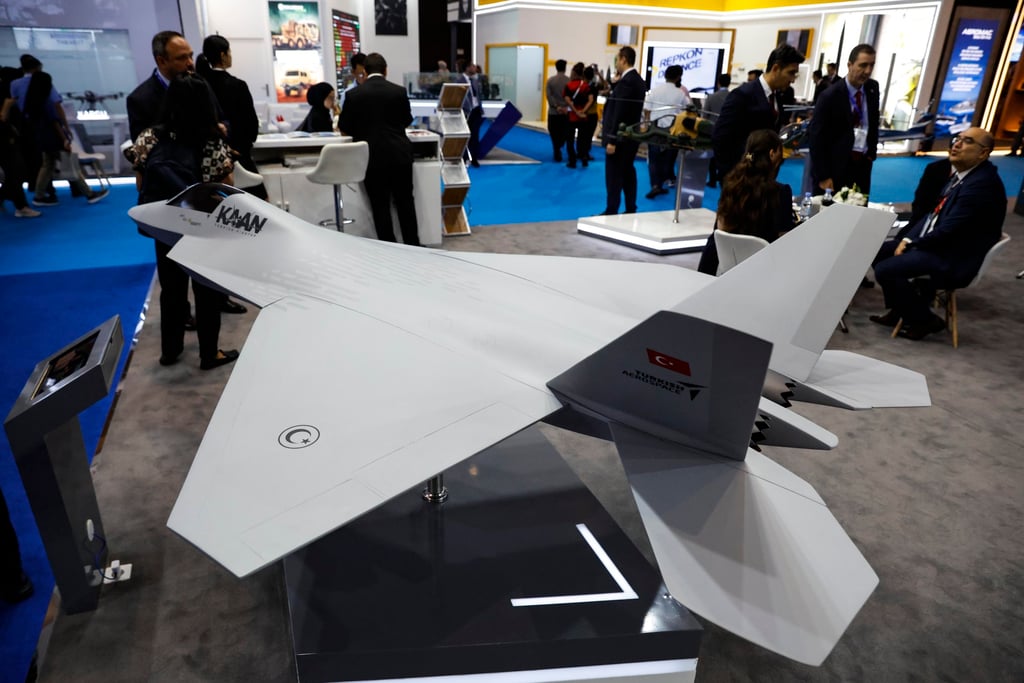
Visitors view scale models of Turkey’s Kaan combat aircraft
at the Indo Defense expo in Jakarta, Indonesia, in June 2025. Indonesia
previously sealed a deal to purchase 48 of the fifth-generation stealth
fighters from Ankara. Photo: EPA
Qatari capital is already
flowing into Indonesia’s defence industries. In January, Barzan Holdings, an
investment arm owned by Qatar’s Ministry of Defence, signed a US$2.3 billion
joint venture with Indonesian firm Republikorp to modernise the military’s land
and maritime systems.
In a statement on
Saturday, Norman Joesoef, chairman of Republikorp, said the venture “is an
example of an industrial partnership to develop defence industry cooperation
within the framework of the Badr initiative”.
“This collaboration opens
up opportunities for joint production, research and development, technology
transfer and technical training to strengthen the defence industry’s
capabilities and build a more resilient supply chain,” Joesoef, who attended
the MOU signing event in Doha, said, as cited by state news agency Antara.
Cooperation with
Islamabad is also gaining momentum. Marina Ika Sari, a researcher with the
Asean Studies Programme at the non-profit think tank The Habibie Centre, noted
a marked increase in high-level exchanges since President Prabowo Subianto
visited Pakistan in December, followed by bilateral ministerial visits and
meetings with the Pakistani Air Force chief of staff in Jakarta.
“Indonesia is considering
procuring 40 JF-17 Thunder fighter jets from Pakistan, but the process is
currently still in the exploratory stage,” Sari said. “Pakistan has experience
in producing and maintaining defence systems such as military aircraft,
warships and land-based weapons.”
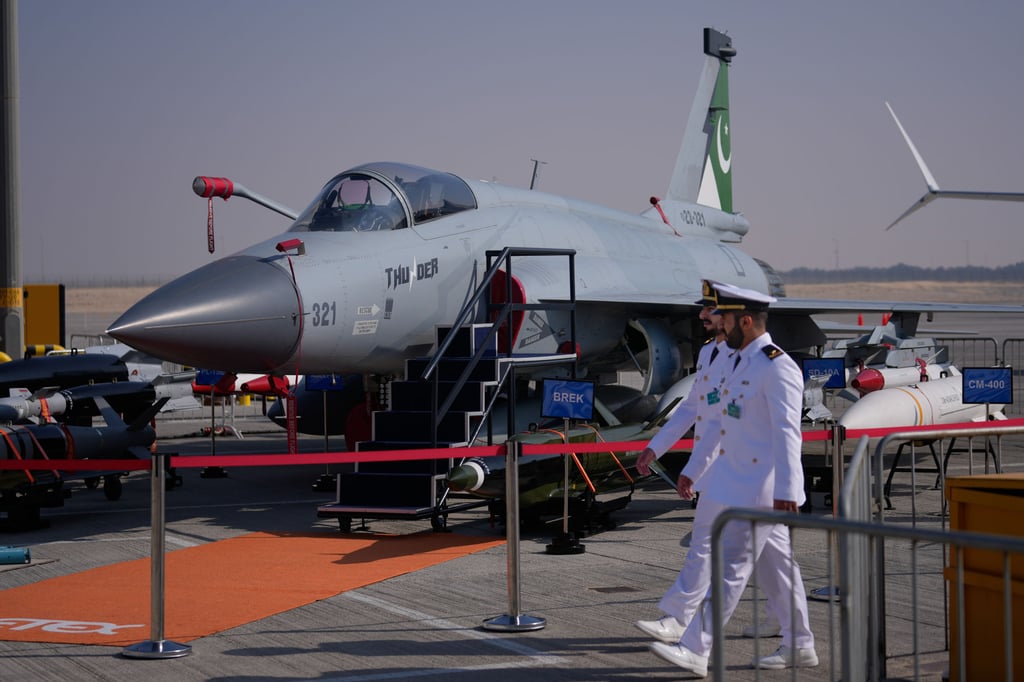
A Pakistani Air Force JF-17 Thunder on display at the Dubai
Air Show, United Arab Emirates, in November. Indonesia is currently exploring a
potential deal to purchase up to 40 of the fighter jets from Islamabad. Photo:
AP
But integrating different
platforms into Indonesia’s existing inventory presents logistical challenges.
“The problem is that the
JF-17 is made together with China, so there is a question of how it will fit
with our Rafale and Kaan jets,” Muhammad said.
Indonesia has ordered 42
Dassault Rafale fighter jets from France – six of which have been delivered,
with 18 more due between 2027 and 2029 – while also purchasing defence
equipment from South Korea, Italy and India.
Not a military bloc
Experts agreed that Badr
was an industrial and technical framework rather than a collective defence
pact, meaning it did not violate Indonesia’s long-standing bebas dan aktif
(independent and active) foreign policy doctrine.
Nonetheless, Jakarta must
navigate external perceptions carefully.
“Pakistan maintains close
ties with China and plays a strategic role in the conflict between the United
States and Iran. Turkey and Qatar have their own positions in the Middle East.
Other countries such as Iran, the United States or Israel might perceive
Indonesia as moving closer to the Turkish bloc,” Ahmad said.
“It can be easily
clarified that this defence cooperation is not an alliance or a mutual defence
agreement. It is merely a step-up of an existing bilateral framework.”
Muhammad said that while
Badr signalled Jakarta’s aspiration to play a more proactive role in the
Islamic world beyond diplomatic advocacy on Palestine, it should not be
misconstrued as an “Islamic military bloc”.
“Indonesia still needs to
keep good relations with the Association of Southeast Asian Nations, the US and
China. In the end, our image in the Muslim world depends on whether Badr can
deliver real results.”
Sari agreed, adding that
Jakarta must avoid being treated simply as an end-market: “Badr’s success will
be determined by Indonesia’s diplomatic ability to prioritise substantive
projects that align with Indonesia’s defence needs.”
***
By Resty
Woro Yuniar
Resty
Woro Yuniar is a Jakarta-based reporter who covers Indonesian current affairs
and Southeast Asia's tech scene. She was previously Indonesia correspondent at
the BBC and tech reporter with The Wall Street Journal.
This article was
published in South China Morning Post on 28 Oct 2026.